
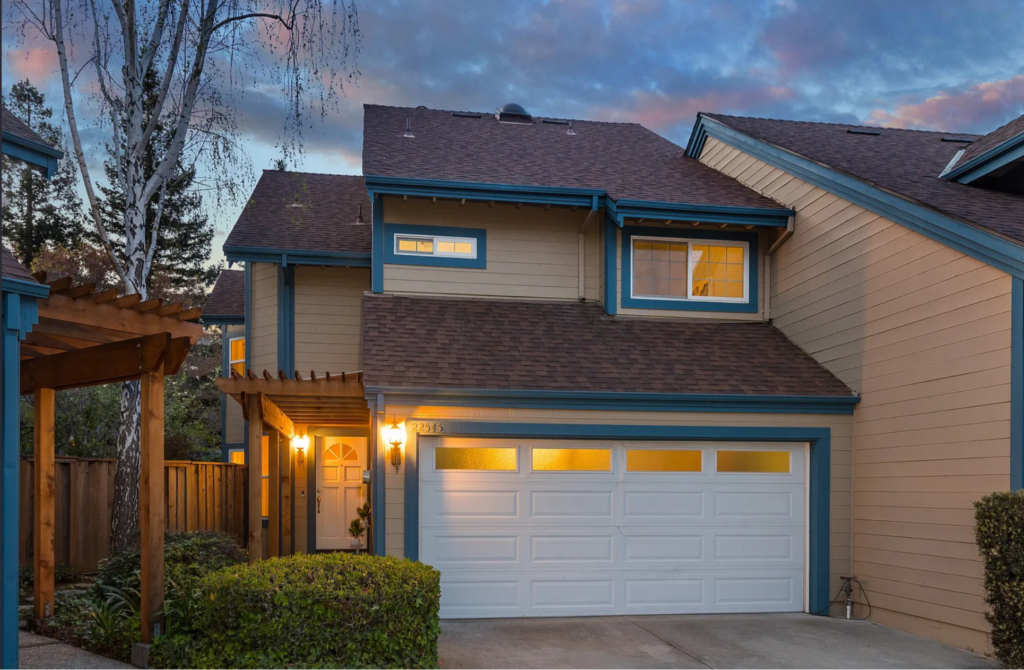
The Silicon Valley Standard: How to Choose the Right General Contractor for Your San Jose, Saratoga, Los Gatos, Los Altos, Cupertino, Sunnyvale or Mountain View Remodel
Full-gut renovations and home expansions across Silicon Valley’s most sought-after cities demand more than a licensed builder. They require a firm fluent in local permit culture, neighborhood architectural standards, and the high expectations of homeowners who built their careers on precision and results.
Choosing a general contractor in Silicon Valley is one of the most consequential decisions a homeowner makes — and one of the most commonly mishandled. Whether you’re gutting a mid-century ranch in Los Altos, expanding a craftsman in Los Gatos, or building an ADU behind your Sunnyvale home, the contractor you select will either protect your investment or quietly diminish it.
This guide is written for homeowners planning a full-gut remodel, a significant room addition, or a complete home transformation across San Jose, Saratoga, Los Gatos, Los Altos, Cupertino, Sunnyvale, or Mountain View. Here’s exactly what separates a contractor capable of delivering that work — from one who isn’t.
- Local Expertise Across Every City Is Non-Negotiable
Silicon Valley covers seven distinct cities, each with its own planning department, permit culture, zoning code, and inspection timeline. A contractor who works primarily in one city may be completely unprepared for the requirements of another — and that unpreparedness will show up as delays, redesigns, and added costs on your project.
Here is what true local expertise looks like across each city:
- San Jose: Home to some of the most active remodeling markets in the South Bay. San Jose’s Permit Center handles high volume, and navigating it efficiently requires a contractor who knows the process cold — from plan check requirements to inspection scheduling in neighborhoods like Willow Glen, Almaden Valley, and Naglee Park.
- Saratoga: Hillside construction permits, Wildland-Urban Interface (WUI) fire safety standards, and strict grading requirements define projects here. A contractor without specific hillside and WUI experience in Saratoga is a timeline risk — and a potential insurability issue for your property.
- Los Gatos: Los Gatos’s historic downtown overlay and its hillside neighborhoods carry design review requirements that can add months to a project if a contractor doesn’t know the approval process. Architectural compatibility with existing neighborhood character is often reviewed before permits are issued.
- Los Altos & Los Altos Hills: Los Altos and Los Altos Hills carry distinct requirements — the Hills in particular involves Open Space easements, lot coverage restrictions, and Town Council approval for larger expansions. Flat Los Altos has its own planning commission standards for additions and second-story work.
- Cupertino: Cupertino’s proximity to Apple’s campus has driven significant residential investment, and the city’s planning department reflects that with methodical review processes. Green building compliance and energy code adherence are closely checked on all permitted work.
- Sunnyvale: A rapidly evolving housing market with strong demand for ADUs, kitchen overhauls, and whole-home renovations. Sunnyvale’s Community Development department operates on predictable timelines — but only if your contractor submits complete, accurate plans the first time.
- Mountain View: Mountain View’s mix of tech professionals and long-term residents creates demand for both high-end remodels and practical additions. The city’s permit office is generally efficient, but design review is triggered more frequently on projects involving exterior changes or second-story additions.
The right question to ask any contractor: “Which of these cities have you pulled permits in, and can you walk me through a recent project from submission to final inspection?” A confident, specific answer tells you everything.
- Full-Gut Expansions Require a Different Class of Builder
A cosmetic refresh and a full-gut renovation are entirely different undertakings. One requires skilled tradespeople following a clear plan. The other requires a builder with engineering fluency, a deep subcontractor bench, and the organizational capacity to manage a 12 to 18-month project without losing design intent, budget discipline, or your sanity along the way.
Engineering Precision
Can the contractor handle structural steel integration for open-concept layouts? Complex foundation work on the varied terrain found across Saratoga’s hillsides or Los Gatos’s canyon properties? Subterranean expansions — wine cellars, home theaters, wellness suites below grade? These capabilities require trusted engineering partnerships and a proven track record of executing complex permitted work.
Grade-A Finish Quality
Homeowners in Los Altos, Cupertino, and Mountain View increasingly expect the same level of finish quality found in higher-priced markets. Custom millwork, book-matched stone, integrated smart home systems, and spa-grade bathroom finishes are now standard expectations — not premium add-ons. A contractor who can’t execute at this level will be apparent the moment you review their portfolio.
Architectural Synergy
The best projects across Silicon Valley begin with tight collaboration between architect, interior designer, and general contractor from day one — not after design is locked. A contractor who arrives late to the design process will make costly field adjustments that compromise the architect’s intent. Look for a builder with established relationships with reputable local architects and a demonstrated history of protecting design vision through every phase of construction.
5 QUESTIONS TO ASK BEFORE YOU SIGN A CONTRACT 1. Can you show me three completed full-gut projects in my specific city — with permit records and homeowner references? 2. Who are the structural and MEP engineers on your team, and have they worked on projects with similar site conditions? 3. What project management platform do you use, and how often will I receive written updates on budget and schedule? 4. What does your insurance profile look like beyond the standard $1M/$2M limits — do you carry umbrella and professional liability coverage? 5. How do you handle mid-project design changes, and what is your change order process? |
- Transparency Is a Requirement, Not a Courtesy
For a high-value project spanning a year or more, the quality of your contractor’s communication infrastructure matters as much as the quality of their crews. You should never be in a position where you’re chasing your contractor for an update on your own home.
Real-Time Project Visibility
Professional-grade contractors use platforms like Buildertrend or CoConstruct to give clients daily construction logs, photo documentation, live budget tracking, and schedule adherence reporting. If a firm can’t demonstrate a clear system for client communication during your first conversation, that is a preview of what your project experience will feel like.
Insurance That Matches Your Project’s Value
Standard general liability coverage of $1M per occurrence is the minimum. For a full-gut renovation on a home worth $2M to $5M — common across Los Altos, Cupertino, and Saratoga — your contractor should carry a high-limit umbrella policy and professional liability coverage as well. Request certificates of insurance before anything is signed, and verify them directly with the carrier.
Value Engineering Without Compromising Design
Supply chain disruptions and extended lead times on custom materials are realities in today’s construction environment. An experienced contractor brings value engineering to the table — the ability to propose intelligent alternatives that maintain design integrity without blowing the timeline. This is a genuine skill. Ask for specific examples from past projects.
- The Verification Checklist: What to Confirm Before You Commit
No matter how polished the presentation or impressive the portfolio, complete these steps before signing any contract.
☑ CSLB License Verification
Check your contractor’s license status at cslb.ca.gov. Confirm it is active, that the license classification covers your specific project scope, and that workers’ compensation insurance is current. A lapsed policy is a legal and financial liability that falls on you as the homeowner.
☑ References in Your Neighborhood
Ask for addresses of completed projects in your city — ideally within a few miles of your home. Drive by. Call the homeowners. A contractor with a strong local track record will offer this without hesitation.
☑ Subcontractor Transparency
Who is doing the electrical, plumbing, and HVAC work — and how long have they worked with this GC? Established subcontractor relationships reduce the coordination failures that cause the most expensive, most frustrating delays.
☑ Contract Clarity
A professional contract defines scope of work, payment schedule, change order process, dispute resolution, and project milestones — in writing. Vague contracts protect the contractor, not you. For projects above $150K, consider having a real estate attorney review before signing.
☑ The Communication Test
How quickly did they return your first call? How organized was their initial site assessment? How clearly did they explain costs and process? These early signals reliably predict your experience over the next 12 to 18 months of construction.
- Respecting Each Neighborhood’s Character
Silicon Valley is not a monolithic market. Each city has a distinct architectural identity — and successful remodels are ones that honor that identity rather than ignore it.
Renovating a mid-century ranch in Los Altos means working with clean lines and indoor-outdoor flow, not against them. Expanding a craftsman bungalow in the Willow Glen neighborhood of San Jose means sourcing profiles and materials that feel authentic to the era. Modernizing a split-level in Cupertino means integrating smart home systems so seamlessly they disappear into the architecture.
A contractor who has spent their career on commercial tenant improvements or tract home developments does not carry this sensibility. It develops from years of working in these specific neighborhoods — alongside the architects, designers, and craftspeople who understand them.
The right remodel does not just improve your home. It strengthens its position within the neighborhood — and that shows up directly in long-term market valuation.
- ADUs Across Silicon Valley: A Major Opportunity
California’s ADU legislation has fundamentally changed what’s possible on lots across San Jose, Sunnyvale, Mountain View, and Cupertino. Many homeowners who assumed their property was too constrained to add square footage are discovering that a detached studio, a garage conversion, or a junior ADU is not only feasible — it’s a high-performing income-producing asset in one of the country’s most competitive rental markets.
ADU permit complexity varies significantly by city. Sunnyvale and Mountain View have relatively streamlined ADU processes. San Jose’s Permit Center handles high ADU volume and rewards contractors who submit complete, accurate plans. Saratoga and Los Gatos require more careful navigation of setback rules and design review thresholds.
Work with a contractor who has completed ADU projects in your specific city — not just ADUs in general — and can show you realistic timelines from permit submission to certificate of occupancy.
- Smart Home Integration & California’s Green Mandates
Silicon Valley homeowners increasingly expect their remodeled homes to be tech-ready and energy-forward — not as luxury additions, but as baseline expectations. California’s evolving energy standards (Title 24) and natural gas phase-out policies mean these decisions need to be built into the project from the start, not retrofitted after the walls are closed.
Look for a contractor who understands all-electric panel upgrades, EV charging infrastructure, heat pump HVAC systems, energy-efficient window packages, and whole-home smart integration — and who can coordinate these systems with your electrician and MEP engineers without treating them as afterthoughts.
PLANNING A REMODEL IN SAN JOSE, SARATOGA, LOS GATOS, LOS ALTOS, CUPERTINO, SUNNYVALE OR MOUNTAIN VIEW?
408 Builders Inc. is a licensed general contractor serving the full South Bay
and Silicon Valley corridor. CSLB License #1152286.
We begin every project with a free site walkthrough and an honest conversation
about what your home can realistically achieve — on your timeline and budget.
(408) 609-1643
info@408buildersinc.com
www.408buildersinc.com
Related Posts
The Silicon Valley Standard
The Silicon Valley Standard: How to Choose the Right General Contractor for Your San Jose, Saratoga, Los Gatos, Los Altos,